
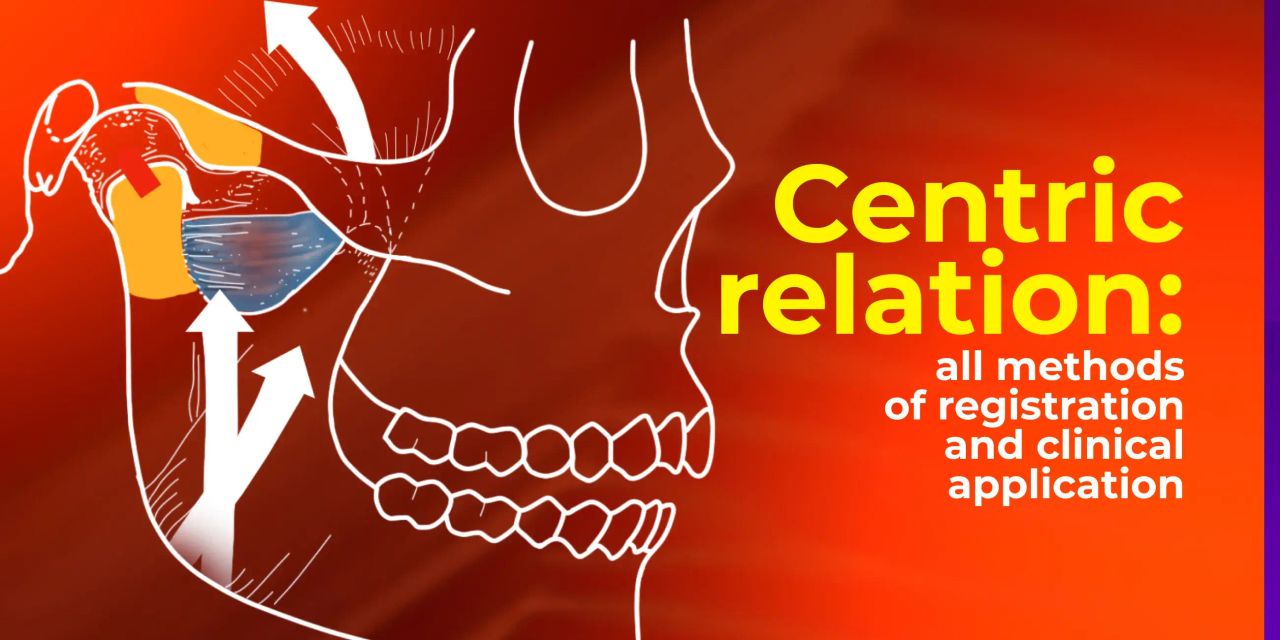
Centric relation: all methods of registration and clinical application


Centric relation: all methods of registration and clinical application
Jean-Daniel Orthlieb, Michael Miyasaki, Marcelo Matos, Kamil Stefański, Mike RacichKhóa học gồm các bài học sau:
Nhận khóa học này và 1 200 giờ học với Premium.
bao gồm những gì
Khóa học trực tuyến này
Chi tiết
8 bài học (9giờ 15phút)
8.5 Tín chỉ CE

Tiếng Anh
Quyền xem bản ghi trong thời hạn gói Premium của bạn
Mô tả
Centric relation is the key to successful dental treatment!
We've put together EVERYTHING every dentist needs to know about the centric relation in one course where you'll learn:
– All popular centric relation registration protocols: classical and digital
– Treatment planning taking into account the centric relation
– Centric relation in the work of an orthodontist and prosthodontist.
This course is required for all dentists involved in prosthetics, orthodontics and the treatment of tooth wear. After completing the training, you will be able to choose the optimal concept for CR registration!
Bài học 1.Centric relation: introduction
– Centric Relation: modern definition
– Centric Relation: evolution of terminology
– Centric Occlusion: definition
– Vertical dimension of occlusion (VDO): definition
– Rule of thirds
– Mutually Protected Occlusion
– TMJ examination: clinical and laboratory
– Habit bite
– Centric Relation: clinical recommendations
– Chewing studies.
Recommended for: Orthodontists, Prosthodontists, Functional dentists, Dental technicians, General dentists.
Bài học 2.From the historical mechanic "centric relation" to a biological model
– The importance of CR in dentistry
– The modifications of the concept of centric relation (CR) over the years
– The problem and limitations of use CR for diagnosis and treatment
– Imaging and the jaw relationship
– Condyle position from a biological perspective
– TMJ pathology and its impact on occlusion
– Dental based vs orthopedic based occlusion.
Recommended for: Orthodontists, Prosthodontists, Functional dentists, Dental technicians, General dentists.
Bài học 3.CR registration using hard wax
– The terminal hinge axis movement concept
– Stable centric relation: definition
– P.K. Thomas and Lauritzen manipulation and the P. Dawson maneuver: disadvantages
– Method of registration of the centric relation using wax plates
– Creation of an anterior occlusal stop: indications and methodology
– Reproducibility of the central ratio: Split cast technique.
Recommended for: Orthodontist, Gnathologist, Prosthetist, Dental Technician, General Dentist.
Bài học 4.CR registration using neuromuscular approach. How to achieve stable results
– Occlusion and malocclusion: definition
– Rationale behind the neuromuscular approach to occlusion
– The concept of habitual bite
– Physiologic vs accommodative trajectory
– Available equipments used to diagnose and treat cases via neuromuscular approach
– Patient examination algorithm in the concept of neuromuscular dentistry
– CR registration using neuromuscular approach
– 3 keys to work in the concept of neuromuscular dentistry
– The method of obtaining the registry
– Orthotic: types and advantages of application
– Goals of the phase II of treatment
– What final options are available and an example of approaching a worn dentition rehabilitation
– Framework to approach occlusal stability.
Recommended for: Prosthodontists, Functional dentists, Restorers, General dentists.
Bài học 5.Dawson method of centric relation determination
– Centric Relation: definition and history
– Factors that affect Centric Relation records
– Central occlusion and maximal intercuspidation
– TMJ problems during orthodontic treatment
– Posselt diagram
– Occlusal diseases
– FACE Digital Mounting: principles
– Evaluation of Centric Relation term
– Centric Relation registration method: Dawson method and Lucia jig
– Preparation for orthodontic treatment
– Preparation for Centric Relation establishment: muscles deprogramming
– Mountings in Centric Relation
– Mistakes in Centric Relation determination.
Recommended for: Orthodontists, Prosthodontists, Functional dentists, Dental technicians, General dentists.
Bài học 6.Digital methods of centric relation determination
– The reliability of radiological methods for determining central occlusion
– Digital bite from IOS
– The concept of Tx: vertical control
– Centric Relation in case aligner treatment
– Prescription for technicians
– Aligners — save distalization appliance to hight-angle patients
– TMJ disk lock
– Pros and cons of digital treatment planning in arc of closure
– Hybrid treatment with Stop&Go: protocol
– Axioprisa: advantages of the technique
– Digital mounting protocols
– Surgery cases simulation.
Recommended for: Orthodontists, Prosthodontists, Functional dentists, Dental technicians, General dentists.
Bài học 7.Determining the CR using Lucia Jig
– Patient deprogramation
– Dawson Maneuver
– Placing the Lucia Jig: the technique, materials, typical mistakes
– Denar Wax or silicon bite registration: which method is better? Typical mistakes. Proper sequence of workflow
– Facebow
– Analogue models mounting in the articulator
– Models CR analysis.
Recommended for: Orthodontists, Prosthodontists, Functional dentists, Dental technicians, General dentists.
Bài học 8.Interdisciplinary treatment planning in the concept of centric relation
– Surgical cases in orthodontic treatment:
- transverse analysis
- suture maturity
- expantion
- Silesia Expander by Dr. Kamil.
– Digital assistent in dental office
– Molar torque correction
– Torque selection based on CBCT
– Assessment of long-term results of treatment.
Recommended for: Orthodontists, Prosthodontists, Functional dentists, Dental technicians, General dentists.
Khóa học gồm các bài học sau: