

Signs indicating for orthodontic treatment

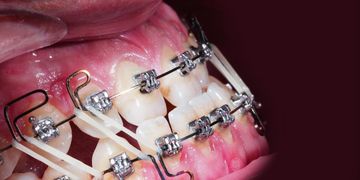
Signs indicating for orthodontic treatment
Andre Horn
Nhận khóa học này và 2 800 giờ học với Premium.
bao gồm những gì
Khóa học trực tuyến này
Chi tiết
2 bài học (2giờ 41phút)
Chứng chỉ quốc tế OHI-S
2.25 Tín chỉ CE

Tiếng Anh
Quyền xem bản ghi trong thời hạn gói Premium của bạn
Mô tả
-
Bài học 1.Signs Indicating for Orthodontic treatment. Part 1
If orthodontic treatment is to be of benefit to a patient, the advantages it offers should outweigh any possible damage it may cause.
Signs Indicating for Orthodontic treatment:
• Facial imbalance or asymmetry;
• Oral habits dysfunctions;
• Crowding, misplaced, or blocked-out teeth;
• Open bites and deep bites;
• Protruding teeth and facial unbalance;
• Retrusion of the chin in Class II.
An attractive smile is a wonderful asset. It contributes to self-esteem, self-confidence and self-image. But we must evaluate the Risks and the Benefices before to take a decision for the patient and family. Risks increase the possible failures and relapse. Risks on Facial balance:
• Flatten faces with extractions protrusion of the face on non-extraction treatment;
• Anchorage lost;
• Temporomandibular injuries. Risks on teeth and periodont:
• Enamel decalcification and fracture;
• Pulp Vitality, Root resorption;
• Uncontrolled periodontitis;
• Uncontrolled oral hygiene.
So, acknowledgement of failure is important but an orthodontic specialist should have the possibility to treat their patients with a minimum of risks with: сlear and strong diagnosis for treatment decision.
• Respect of the limits of the denture: transversal, vertical and sagittal;
• Do not tip labialy the anterior teeth;
• Overcorrect the overbite;
• Overcorrect the class II discrepancy;
• Maintain arch form and arch width;
• Maintain vertical dimension;
• Think about ROOT, not only Crown;
• BONDING.
• High degree of control during the therapy orthodontic and/or orthopedics including the Ortho-surgical association.Orthodontics is not only a bracket slot!
The Edgewise concept is based on analysis and strategy with the management of the denture to obtain the best functional occlusion that protect TMJ.
The orthodontic treatment is the service rendered to the patient first!
Occlusal management depends on the position of the teeth before the treatment and the movements planned according the objectives.
There are two parameters for tooth movement: the force in the wire and the force received by the tooth. The bracket, just transmits the force. So whatever the bracket slot is, in shape and size, the only important thing, is the result of the force system that will move the tooth and group of teeth.The patients should be aware that stability cannot be guaranteed, and that maintenance depends on his compliance. It seems to be a widespread myth that orthodontic results remains stable. Despite this poor situation, we have some arguments for treating malocclusions with an effective stability.
Bài học 2.Signs Indicating for Orthodontic treatment. Part 2
If orthodontic treatment is to be of benefit to a patient, the advantages it offers should outweigh any possible damage it may cause.Signs Indicating for Orthodontic treatment:
• Facial imbalance or asymmetry;
• Oral habits dysfunctions;
• Crowding, misplaced, or blocked-out teeth;
• Open bites and deep bites;
• Protruding teeth and facial unbalance;
• Retrusion of the chin in Class II.
An attractive smile is a wonderful asset. It contributes to self-esteem, self-confidence and self-image. But we must evaluate the Risks and the Benefices before to take a decision for the patient and family. Risks increase the possible failures and relapse. Risks on Facial balance:
• Flatten faces with extractions protrusion of the face on non-extraction treatment;
• Anchorage lost;
• Temporomandibular injuries. Risks on teeth and periodont:
• Enamel decalcification and fracture;
• Pulp Vitality, Root resorption;
• Uncontrolled periodontitis;
• Uncontrolled oral hygiene.
So, acknowledgement of failure is important but an orthodontic specialist should have the possibility to treat their patients with a minimum of risks with: сlear and strong diagnosis for treatment decision.
• Respect of the limits of the denture: transversal, vertical and sagittal;
• Do not tip labialy the anterior teeth;
• Overcorrect the overbite;
• Overcorrect the class II discrepancy;
• Maintain arch form and arch width;
• Maintain vertical dimension;
• Think about ROOT, not only Crown;
• BONDING.
• High degree of control during the therapy orthodontic and/or orthopedics including the Ortho-surgical association.Orthodontics is not only a bracket slot!
The Edgewise concept is based on analysis and strategy with the management of the denture to obtain the best functional occlusion that protect TMJ.
The orthodontic treatment is the service rendered to the patient first!
Occlusal management depends on the position of the teeth before the treatment and the movements planned according the objectives.
There are two parameters for tooth movement: the force in the wire and the force received by the tooth. The bracket, just transmits the force. So whatever the bracket slot is, in shape and size, the only important thing, is the result of the force system that will move the tooth and group of teeth.The patients should be aware that stability cannot be guaranteed, and that maintenance depends on his compliance. It seems to be a widespread myth that orthodontic results remains stable. Despite this poor situation, we have some arguments for treating malocclusions with an effective stability.